Tracked 300+ Daily Tasks Over 4 Months: The App That Finally Brought My Life into Focus
Ever feel like your day slips away before you even start? I used to miss deadlines, forget small promises, and constantly replay what I should’ve done. Then I found a simple tool that changed everything—not because it’s flashy, but because it quietly helped me see my progress. In this guide, I’ll walk you through how I turned chaos into clarity, one tracked task at a time. It’s not about perfection—it’s about peace. And if you’ve ever looked at the clock at 9 p.m. and thought, ‘What did I even do today?’—this is for you.
The Morning That Changed Everything
It was a Tuesday, and like so many mornings before it, I was already behind. The kitchen counter was buried under breakfast dishes, a half-packed school bag sat by the door, and my phone buzzed with an email reminder: ‘Parent-Teacher Conference Confirmation – Please Respond by 3 PM Today.’ My daughter looked up from her cereal and asked, ‘Did you sign my field trip form?’ I froze. I hadn’t. Again. It wasn’t that I didn’t care—I did, deeply. But somewhere between laundry, work calls, and making sure everyone ate, the small things slipped through. And the guilt always followed.
That moment wasn’t unique. It was the pattern of my life. I’d start each week with good intentions—color-coded calendars, sticky notes on the fridge, a fresh notebook. But by Wednesday, the system would collapse under the weight of real life. I began to wonder: Was I just bad at this? Was I the only one who couldn’t keep up? Then, during a rare quiet moment that afternoon, I stumbled on a blog post about progress tracking. Not time blocking. Not rigid schedules. Just seeing what you actually do each day. It sounded almost too simple. But I was tired of failing at complex systems, so I downloaded a task-tracking app that focused on one thing: showing progress over perfection.
The first week was messy. I forgot to log things. I accidentally marked tasks as done when I hadn’t. But then, on day eight, I opened the app and saw a small green bar—30% of my daily tasks completed. It wasn’t impressive, but it was real. For the first time, I wasn’t guessing how my day went. I could see it. That tiny bar made me curious. Could I get to 50% tomorrow? The next week, I made it to 65%. I wasn’t doing more—I was just noticing what I was already doing. And that shift, subtle as it was, changed everything. Visibility didn’t just organize my time; it gave me back my confidence.
Why Seeing Progress Matters More Than Sticking to a Plan
We’ve all been sold the idea that success comes from perfect planning. Wake up at 5:30 a.m., meditate, journal, workout, answer emails by 7 a.m.—you know the drill. But life doesn’t follow a script. Kids get sick. Work emergencies pop up. You’re tired, and suddenly, the whole day feels ruined because you didn’t stick to the plan. I used to fall into that trap—feeling like a failure by 10 a.m. because I hadn’t done my ‘ideal’ morning routine. What I didn’t realize was that motivation doesn’t come from perfection. It comes from proof.
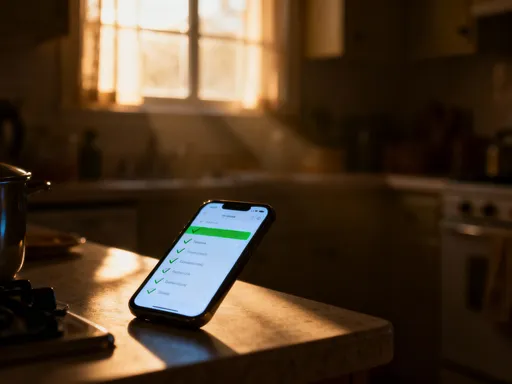
Studies in behavioral psychology show that when we see evidence of our progress—no matter how small—our brain releases dopamine, the same chemical linked to reward and motivation. It’s why crossing off a to-do list feels satisfying. But most planners only show what’s left to do, not what you’ve already accomplished. That’s where progress tracking made the difference. My app didn’t just list tasks—it showed streaks, completion rates, and weekly trends. One evening, after a particularly rough day, I opened it expecting to see failure. Instead, I saw that I’d completed 7 out of 10 daily goals. Seven. Not perfect, but far from nothing. That visual proof reminded me: I was still moving forward.
And that changed how I felt about myself. Instead of thinking, ‘I didn’t do enough,’ I started thinking, ‘Look what I did do.’ That small mental shift reduced my anxiety and made me more likely to try again the next day. I stopped seeing the app as a judge and started seeing it as a witness—a quiet companion that said, ‘Hey, you showed up. That counts.’ It wasn’t about following a plan perfectly. It was about recognizing that effort, even when messy, is still effort. And that recognition? That’s what kept me going.
Choosing the Right App: Simplicity Over Features
When I first started looking, I downloaded every productivity app I could find. Some had flashy dashboards, AI-powered suggestions, and integrations with calendars, emails, and smart home devices. One even promised to ‘optimize your life using machine learning.’ But after a few days, I felt more overwhelmed than before. The apps were so busy trying to be smart that they made the simple act of tracking a task feel like a chore. I’d spend more time setting up reminders than actually doing the tasks.
Then I found one that was different. No complex menus. No pressure. Just a clean screen with three buttons: ‘Today,’ ‘Progress,’ and ‘Settings.’ I could add a task in seconds. I could mark it done with one tap. And each evening, I’d open the ‘Progress’ tab and see a simple bar chart showing how many tasks I’d completed that week. No jargon. No graphs I didn’t understand. Just clear, gentle feedback. That was the one. I stuck with it.
What made it work wasn’t the technology—it was the design philosophy. The best tools don’t shout at you. They whisper. They fit into your life instead of demanding that you change for them. I looked for three things: ease of use, visual feedback, and flexibility. I didn’t need an app that could predict my future—I needed one that helped me notice my present. And this one did. I started using it for everything: packing lunches, calling my sister, watering the plants. Even my teenager noticed. ‘Mom, you’ve got three green dots in a row,’ she said one day, peering over my shoulder. ‘Does that mean you finally remembered to take your vitamins?’ We both laughed. But it was true. The app wasn’t just organizing my tasks—it was becoming part of our family culture.
Setting Up Your First Progress-Focused Schedule
If you’re thinking about trying this, my biggest piece of advice is: start small. Don’t try to track your entire life on day one. I made that mistake. My first list had 12 tasks—everything from ‘review budget’ to ‘stretch for 15 minutes’ to ‘read scripture.’ By day three, I was already failing. I felt discouraged. So I deleted it all and started over with just three.
Three tiny things: ‘Reply to one email,’ ‘Spend 10 minutes with my child,’ and ‘Walk outside.’ That was it. No pressure. No complexity. Each morning, I’d open the app and see those three items. Some days, I’d forget. But most days, I’d tap ‘done’ after each one. And each evening, I’d look at the weekly chart. Seeing even two out of three completed felt like a win. After a week, I had five green bars out of seven. 71%. Not bad for barely trying.
That’s when I realized something powerful: progress tracking isn’t about doing more. It’s about seeing more. I’d always thought I wasn’t doing enough. But the data showed otherwise. I was replying to emails. I was connecting with my daughter. I was getting outside. I just hadn’t been noticing. Over the next few weeks, I slowly added tasks—‘Cook a healthy dinner,’ ‘Call a friend,’ ‘Write in journal.’ But I never added more than one new thing per week. And I made sure each task was small enough to feel doable, even on a hard day. The goal wasn’t to build a perfect routine. It was to build awareness. And that awareness became the foundation of everything that came after.
Turning Small Wins into Lasting Habits
About six weeks in, something unexpected happened: I started looking forward to opening the app. It wasn’t a chore anymore. It felt like checking in with a friend who kept track of my wins. The streak counter—those little unbroken dots on the calendar—became motivating in a quiet, personal way. I didn’t want to break the chain, not because I was chasing perfection, but because I could see what consistency looked like.
Then came the day I missed. I was at the hospital with my son after a minor fall. No emails replied to. No walk outside. No journal entry. I opened the app that night expecting to feel guilty. But instead of a red X or a scolding message, it just showed a gap. No drama. No judgment. Just a space where progress had paused. And the next day, it welcomed me back with the same calm interface. That moment taught me more than any success had. Life happens. And a good system doesn’t punish you for it—it helps you return.
Over time, these small wins built something deeper: self-trust. I began to believe that I could follow through, not because I was perfect, but because I kept showing up. My daughter noticed too. One morning, as I grabbed my shoes, she said, ‘Don’t forget your walk, Mom. You’re on day 14!’ I smiled. What had started as a personal experiment had become part of our daily rhythm. The app wasn’t just changing my habits—it was modeling consistency for my family. And that, I realized, was one of the greatest gifts I could give them: the quiet confidence that small efforts, repeated, really do add up.
Balancing Flexibility and Consistency
One of the biggest myths about productivity is that consistency means rigidity. But real consistency isn’t about doing the same thing every day no matter what. It’s about staying connected to your intentions, even when life changes. And that’s where the app truly shined. It didn’t demand that I stick to a fixed list. It allowed me to adapt.
When my mother came to visit for two weeks, my routine shifted. I wasn’t working late or going to the gym. But I was cooking for her, helping her organize old photos, and spending evenings listening to her stories. So I adjusted my tasks. I replaced ‘Work on project’ with ‘Help Mom with groceries.’ I changed ‘30-minute workout’ to ‘Walk with Mom in the park.’ The app didn’t care about the labels. It only cared that I was making an effort. And when I looked at my weekly chart, I still saw green bars—proof that I was showing up, just in a different way.
This flexibility removed so much pressure. I stopped feeling like I was failing when life changed. Instead, I learned to measure success not by a checklist, but by presence. Was I engaged? Was I kind? Was I trying? The app helped me redefine consistency as adapted effort—a more compassionate, human way to grow. And that made all the difference. I wasn’t tracking tasks to become someone else. I was tracking them to become more fully myself—responsive, caring, and resilient, no matter what the day brought.
How Progress Tracking Changed More Than My Schedule
Four months in, I’ve tracked over 300 daily tasks. I’ve had streaks of 20 days and gaps of three. I’ve celebrated small wins and learned from missed days. But the biggest change isn’t in my productivity—it’s in my peace. I’m calmer. More present. Kinder to myself. I no longer start the day bracing for failure. I start it curious: What will I notice today?
The app didn’t fix my life. It didn’t make me richer, thinner, or more famous. What it gave me was something far more valuable: a clear mirror. For years, I’d been running on self-doubt, assuming I wasn’t doing enough. But the data told a different story. I was doing enough. I was caring for my family. I was growing. I just hadn’t been able to see it.
Now, when I feel overwhelmed, I open the app and look at the last month’s chart. I see the patterns—the busy weeks, the quiet ones, the days I showed up even when I didn’t feel like it. And I remember: progress isn’t always loud. Sometimes, it’s a single green dot on a screen. Sometimes, it’s remembering to take your vitamins. Sometimes, it’s ten minutes of focused time with your child. These moments matter. And when you can see them, you begin to believe in them. And when you believe in them, you begin to believe in yourself.
This journey wasn’t about mastering technology. It was about reclaiming my attention, my time, and my self-worth. It was about learning that growth doesn’t have to be dramatic to be real. And it was about realizing that the most powerful tool I have isn’t in my phone—it’s in my ability to notice, appreciate, and continue. So if you’re feeling lost in the daily grind, I invite you: try tracking just one thing. One small effort. And let yourself see it. Because sometimes, the most revolutionary act is simply bearing witness to your own life. And that, my friend, is where true peace begins.